Thank you National Garden Clubs! We won a Plant America Grant. This will allow us to tag/identify plants and document the wildlife that uses them. Native plants may not be as showy as cultivars, but to the animals that need them, they are a thing of beauty.
Tuesday, January 31, 2023
Friday, March 18, 2022
Partners for Pollinators
Mickey and I met with the Master Gardeners on 3/10. Mother Nature was contributing free water generously so we met at a restaurant and shared our expectations. The Master Gardeners did not have a native plant garden at the Extension Center so this was an opportunity to use our foundational skills to expand our expertise with natives, while providing a demonstration garden to educate the public and increase its appreciation of pollinators and native plants. Since the garden was in need of much attention, we decided to meet weekly for the next month or so to clean it up, document what was growing, and locate and plant needed additions.
On March 17 five of us met to start pruning, raking, and pulling dead and overgrown plants. The firebush had spread like, well, like wildfire and we decided to dig up the volunteers as soon as possible and find new owners for them. The Walters Viburnum was growing over the sidewalk and impeding pedestrians. It was doing so because it got its most consistent source of sunlight from the east (over the walkway). We decided we'd work on a drastic pruning regime - taking 1/3 of the overhanging boughs at a time until it was trimmed up to spec. We mused on ways to "train" the remaining trunks/branches to not overspread the walkway again. It was really planted much too close to the sidewalk. But who among us hasn't made THAT mistake!
The majority of the time we tidied up and pruned spent plants and foliage. We started from the western side of the garden (the entrance) and worked east through all the beds. The initial trimming stopped just at the end of the bench and across to the other fence. Big improvement!
Before we left, we identified two large ant mounds around the inside of the walkway. They would need treatment to prevent them from biting visitors. We did some research on which product had the least toxicity for other species. We compared the different products we'd used, and learned one important lesson. We were always taught to read the label for application instructions and for precautions and hazards to wildlife. But when I went to some of the materials safety data sheets and government and university information on the active chemicals, I found that the manufacturer had omitted hazards to some key wildlife: namely bees. Almost all the ingredients were toxic to bees on some level, some highly so. All were highly toxic to aquatic wildlife. Well, bee toxicity ruled out all but one product: Amdro Fire Ant Bait. It contained the ingredient hydramethylnon, which had no toxicity to bees (especially honey bees). If you are maintaining a public garden that visitors are encouraged to walk through, you can't just let fire ants colonize the area. It's a hard decision to apply pesticides to a wild habitat, and that's why it's so important to understand the risks and the proper application. Hopefully that one treatment will tame the fire ants over the summer. See the UF/IFAS publication, "Managing Fire Ants in an Urban Area."
One can never eradicate the mounds entirely, but forcing them to rebuild elsewhere gives us humans breathing room.
Note that fire ants like to colonize sandy areas that are not covered with vegetation. Digging is just easier there. But ants will colonize even a full turf grass area. Get ahead of them by applying chemicals if you need to early in the year.
By the time we finished that day, the garden looked much more cared for!
Inspecting the Garden in February
| Walter's Viburnum in bloom in February (photo by John Battle) |
Before meeting with the Master Gardener Volunteers, my husband and I did a site survey to diagram the garden plots and the walkway. We also made a note of the orientation to estimate sunlight levels. We also noted some problem areas, such as fire ant mounds, unsightly vines and dead plant parts. I drew up a list of butterflies I'd seen in past years and identified host plants. Installing these plants if there were none in the garden would be a big priority.
The garden documentation is in the right column of this page. I scheduled a meeting with the Master Gardeners to give them the backgorund info and to plan our gardening schedule.
Wednesday, March 6, 2019
Helping the Planet Stay Healthy
It's March and many of us are thinking about enjoying the beach. All too often what we find on the shoreline is plastic waste: either left behind by previous visitors or washed up from litter that floats in the ocean. One of the most common plastic items is plasticware from beach picnics. Some of that litter doesn't reach the beach. Divers who have explored Belize's "Blue Hole" have found an enormous amount of litter swirling in its depths. Consider purchasing bamboo dinnerware and utensils to take with you on outings - then take them back home for your next picnic. Bamboo is washable and biodegradable, and we'll be raffling a set of bamboo dinnerware at an upcoming meeting!
Ospreys have made a global comeback thanks to human conservation efforts! Many of us who live near navigable waters are familiar with osprey nests on platforms that also serve as channel markers. Read how well this has worked to bring ospreys back from the brink of extinction at EarthSky news.
Tuesday, February 12, 2019
Fresh Vegetables -- Spelled Y-U-M
Keep in mind that grow-your-own veggies will need more washing than the pre-washed ones you get in the store. A few cleanup procedures before eating will minimize any sand clinging to the vegetable.
Tricks and supplies for cleaning your fresh treasures:
Recipe tips:
Deborah took home a sweet potato, microwaved it, and used it as a healthy snack while she ran errands. And YES you CAN: eat the skins, that is. An average size sweet potato should be microwaved on high for around 5 minutes. Test it by sticking a fork into the flesh; if it feels moderately soft, it's ready to cool and eat. Remember that the potato will continue to cook AFTER it has been taken out of the microwave. If it's still hard, rotate the potato so the bottom is on the top (to cook it more evenly) give it another minute and test again.
Traditional southern recipes for winter greens (mustard, kale, collards) prepare them by cooking in water and flavoring the "juice" with bacon or salt pork. As a "northern girl" I prefer to saute them in a vegetable oil (adding a little water to keep them from drying out. I mix the prepared greens with sauteed sweet onions and a dash of sugar to take away some of the bitter taste. With strong-flavored mustards I add some sesame oil and mix them into an oriental stir-fry.
Arugula, it's not just for salads! The peppery taste of arugula can spice up a lot of foods. Mickey's son added it to pasta, giving this classic dish a savory kick.
Kohlrabi is a popular European vegetable. Both the stems/leaves and bulbs are edible. The leaves can be sauteed like winter greens (see above). The bulb can be cooked in water and prepared like mashed potatoes or soup, or roasted or sauteed and flavored with garlic, Parmesan cheese or herbs. Young and tender kohlrabi may be eaten raw, without peeling.
Tricks and supplies for cleaning your fresh treasures:
- Soak: Let gravity do some of the cleaning and soak the vegetable before starting any other cleaning steps. Fill a big bowl with tap water (or filtered from the tap - your preference). Then let the vegetables soak in the water for 15 minutes, then remove the vegetables from the water. For sandy leafy vegetables, such as spinach, kale, mustard, or chard, you may need to repeat this process a few times.
- Scrub: Use a vegetable brush on the plant while you rinse it off. Skip this step if cleaning leafy veggies. Some stores sell soap formulated to clean vegetables. If your vegetables are just sandy, it's probably not necessary. But if you are cooking for someone with an immune deficiency or a small child, you might want to consider this.
- Rinse and drain.
- Prepare. For the healthiest eating do NOT remove the skins. They are LOADED with vitamins. And YES YOU CAN learn to enjoy this part of the vegetable. Even carrots in a salad don't look unappetizing if you keep in mind how much the skins benefit YOU! OK, you can peel your beets and pumpkin, etc... Unless you want to cook your pumpkin pie in a shell... :) See "What Part of the Plant are You Eating (and Cooking)" for the "First Pumpkin Pie (sort of)" recipe that makes the shell part of the pie from PBS's Autumwatch series. Well, I did NOT get my husband to eat the shell, but I DID!!!!
Recipe tips:
Deborah took home a sweet potato, microwaved it, and used it as a healthy snack while she ran errands. And YES you CAN: eat the skins, that is. An average size sweet potato should be microwaved on high for around 5 minutes. Test it by sticking a fork into the flesh; if it feels moderately soft, it's ready to cool and eat. Remember that the potato will continue to cook AFTER it has been taken out of the microwave. If it's still hard, rotate the potato so the bottom is on the top (to cook it more evenly) give it another minute and test again.
Traditional southern recipes for winter greens (mustard, kale, collards) prepare them by cooking in water and flavoring the "juice" with bacon or salt pork. As a "northern girl" I prefer to saute them in a vegetable oil (adding a little water to keep them from drying out. I mix the prepared greens with sauteed sweet onions and a dash of sugar to take away some of the bitter taste. With strong-flavored mustards I add some sesame oil and mix them into an oriental stir-fry.
Arugula, it's not just for salads! The peppery taste of arugula can spice up a lot of foods. Mickey's son added it to pasta, giving this classic dish a savory kick.
Kohlrabi is a popular European vegetable. Both the stems/leaves and bulbs are edible. The leaves can be sauteed like winter greens (see above). The bulb can be cooked in water and prepared like mashed potatoes or soup, or roasted or sauteed and flavored with garlic, Parmesan cheese or herbs. Young and tender kohlrabi may be eaten raw, without peeling.
Monday, January 21, 2019
A Phenomenon Called The Super Blood Wolf Moon Eclipse
First Nation's peoples had many names for the first moon in January. One name we've appropriated is the, "wolf moon." January is the month the nocturnal wolves howl. Any moon eclipse makes the moon look red, and that's where the name, "blood moon," comes from. The "super" refers to the size of the moon in the sky. The next two months will all feature "super moons."
While Florida was expected to be cloudy on Sunday night, old man winter surprised us with a cold and clear sky, giving us the opportunity to see this phenomenon. Although some people are disappointed that the moon does not look as dramatic as they expect (certainly not as dramatic as the sun in full solar eclipse), I suggest at the next lunar eclipse (in 2021) they take a few minutes to look at the rest of the sky, feel the change in the atmosphere and wind, and listen to the silence of the nocturnal animals. Waiting for the solar eclipse gives you the same experience amplified, except the stars aren't particularly bright.
I got up last night just before midnight and hunkered down on the lanai steps. Even though there was more ambient light than I'd liked, I was still amazed by the stars shining with an ethereal light. Venus was so blue it almost glowed lavender. As the constellations floated westward, I felt the wind pick up, tossing the tree branches to and fro - and then stop in a chilly quiet. That same atmospheric response happened just before the 2017 solar eclipse in South Carolina. Even the wildlife held its breath. Before the solar eclipse the birds fell silent. Before the lunar eclipse the frog's mating calls across the pond diminished then extinguished. The dim red moon held court, spectators reduced to awed silence.
This morning around 6AM, the triumphant moon, radiating like a prize pearl, slid below the trees, leaving only Venus basking in the fading glory.
Enjoy photos of the event and learn more about phenomenon called a lunar eclipse and a rare meteorite strike that happened during the event:
While Florida was expected to be cloudy on Sunday night, old man winter surprised us with a cold and clear sky, giving us the opportunity to see this phenomenon. Although some people are disappointed that the moon does not look as dramatic as they expect (certainly not as dramatic as the sun in full solar eclipse), I suggest at the next lunar eclipse (in 2021) they take a few minutes to look at the rest of the sky, feel the change in the atmosphere and wind, and listen to the silence of the nocturnal animals. Waiting for the solar eclipse gives you the same experience amplified, except the stars aren't particularly bright.
I got up last night just before midnight and hunkered down on the lanai steps. Even though there was more ambient light than I'd liked, I was still amazed by the stars shining with an ethereal light. Venus was so blue it almost glowed lavender. As the constellations floated westward, I felt the wind pick up, tossing the tree branches to and fro - and then stop in a chilly quiet. That same atmospheric response happened just before the 2017 solar eclipse in South Carolina. Even the wildlife held its breath. Before the solar eclipse the birds fell silent. Before the lunar eclipse the frog's mating calls across the pond diminished then extinguished. The dim red moon held court, spectators reduced to awed silence.
This morning around 6AM, the triumphant moon, radiating like a prize pearl, slid below the trees, leaving only Venus basking in the fading glory.
Enjoy photos of the event and learn more about phenomenon called a lunar eclipse and a rare meteorite strike that happened during the event:
- A Meteorite Strike During the Lunar Eclipse - meteorites strike the moon regularly but nobody has ever recorded one striking during a lunar eclipse (11:41PM EST)
- Why Does a Lunar Eclipse Get Called a Blood Moon - a lotta science, but a few "cusswords" in this factual article
Saturday, December 1, 2018
What Part of the Plant are You Eating and Cooking?
With holiday season upon us, we often eat foods that are especially associated with the holidays: pumpkin pie, candied yams (sweet potatoes), cranberries, and greens. We may think we know what part of the plant we are eating, but sometimes the shape or its similarity to other plant parts fools us. We even call certain plants, such as the tomato, "vegetables," when in fact the part we eat is the fruit of the tomato plant. Botanic definitions can differ from common language usage.
So here's a quiz to test your knowledge of the botanical parts of the plants you eat. It's based on the quiz Barbara gave us:
https://drive.google.com/open?id=1ObhQ5wCn51mtWHBZMfuG7SJequkKlZnq
The answers can be found here:
https://drive.google.com/open?id=1X9KFYknBp77Ygygg84L-pYOFZNYTz_Eo
They are based on the University of Florida's 4H horticultural curriculum:
http://sfyl.ifas.ufl.edu/sarasota-docs/4-hrecordbooks/Judging_Hort.pdf
And if all of this "brain work" has given you an appetite, check out a pioneer recipe for "The First Pumpkin Pie - Sort of" from the PBS AutumnWatch New England series.
Dianne made her own healthier version of the pie from a "pie pumpkin." She cut the pumpkin in half along its "equator" and roasted it until the flesh was soft. She used the bottom half of a baked pie pumpkin for the shell, and hollowed out the baked flesh of the top half to make the pumpkin filling adding brown sugar, spices, and condensed milk. She skipped the fruit and spices that were called for in the recipe and used some of Trader Joe's Pumpkin Butter - so easy and tasty! Too bad the Puritans didn't have a store nearby... She poured the pumpkin filling into the shell and baked it at 350 until the filling was "set." Let the filling cool, then slice and serve right from the pumpkin shell. You can eat the shell and skin (or not if you don't like the skin texture).
If you are a purist, you can even use the native American Seminole pumpkin instead of the European variety. Seminole pumpkins have very hard shells, but your reward for halving them for baking is their especially sweet meat.
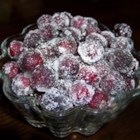
This year we had a bumper crop of cranberries, so why not take advantage of the harvest, and add frosted cranberries to your dessert or snack table? Choose only very fresh berries and use them before they start to turn soft. The frosted cranberries can be stpred in the refrigerator and brought out an hour or two before serving time. They do have a limited shelf life, but don't worry - your diners will make short work of them. See the recipe at the FirstCoast Flora Luncheon Recipes page.
Of course, you know now that BOTH pumpkin pies and frosted cranberries are made from the FRUIT of the plant!
So here's a quiz to test your knowledge of the botanical parts of the plants you eat. It's based on the quiz Barbara gave us:
https://drive.google.com/open?id=1ObhQ5wCn51mtWHBZMfuG7SJequkKlZnq
The answers can be found here:
https://drive.google.com/open?id=1X9KFYknBp77Ygygg84L-pYOFZNYTz_Eo
They are based on the University of Florida's 4H horticultural curriculum:
http://sfyl.ifas.ufl.edu/sarasota-docs/4-hrecordbooks/Judging_Hort.pdf
And if all of this "brain work" has given you an appetite, check out a pioneer recipe for "The First Pumpkin Pie - Sort of" from the PBS AutumnWatch New England series.
Dianne made her own healthier version of the pie from a "pie pumpkin." She cut the pumpkin in half along its "equator" and roasted it until the flesh was soft. She used the bottom half of a baked pie pumpkin for the shell, and hollowed out the baked flesh of the top half to make the pumpkin filling adding brown sugar, spices, and condensed milk. She skipped the fruit and spices that were called for in the recipe and used some of Trader Joe's Pumpkin Butter - so easy and tasty! Too bad the Puritans didn't have a store nearby... She poured the pumpkin filling into the shell and baked it at 350 until the filling was "set." Let the filling cool, then slice and serve right from the pumpkin shell. You can eat the shell and skin (or not if you don't like the skin texture).
If you are a purist, you can even use the native American Seminole pumpkin instead of the European variety. Seminole pumpkins have very hard shells, but your reward for halving them for baking is their especially sweet meat.
This year we had a bumper crop of cranberries, so why not take advantage of the harvest, and add frosted cranberries to your dessert or snack table? Choose only very fresh berries and use them before they start to turn soft. The frosted cranberries can be stpred in the refrigerator and brought out an hour or two before serving time. They do have a limited shelf life, but don't worry - your diners will make short work of them. See the recipe at the FirstCoast Flora Luncheon Recipes page.Of course, you know now that BOTH pumpkin pies and frosted cranberries are made from the FRUIT of the plant!
Friday, March 3, 2017
More About Monarchs!
Click here for photo credit:![]() | |
| Male Monarchs have a dot on their upper hind wings. |
The article, "Monarchs on the March," mentions more information and videos available at our website. Here they are:
- Video on YouTube of Monarch Complete Life Cycle - From the egg to the adult butterfly from the Chicago Nature Museum.
- Monarch Butterfly Lifecycle - Graphic showing the stages and their durations in the monarch lifecycle.
- How Does a Caterpillar Turn into a Butterfly? To become a butterfly, a caterpillar first digests itself. But certain groups of cells survive, turning the soup into eyes, wings, antennae and other adult structures
- Where to See Migrating Monarchs Along the Gulf Coast March and October are peak viewing months to see the long-distance monarchs migrate.
Follow their travels wherever you are! Click on the map to track sightings of monarchs this season and for past seasons. Read about the monarch journey as it unfolds. Maybe you'll want to subscribe to the news updates or post some sightings of your own.
And, in case you missed them, here our past postings on monarchs from beginning to the present:
Thursday, October 27, 2016
Reuse, Recycle, Renew, Repurpose from A to Z
Our secretary, Mickey Fraser, gave us an outstanding presentation on recycling from A to Z. There isn't a letter of the alphabet that she can't cover. Unfortunately, an hour was not enough time to get through all the ideas she had. Her presentation will be posted soon.
Dianne told the members about the dangers of microplastics, tiny beads of plastic that are too small to be filtered out by water sanitation facilities. These microplastics our found in our oceans (and drinking water) and pollute it and the creatures living in it, to their (and our) detriment. September was microplastics awareness month at IFAS UF. Be aware by looking at the ingredients in the products you buy, from toothpaste to body scrub. If you see polyethelene in the list, do not buy the product. Dianne brought two tubes of toothpaste in, one with and one without the ingredient. The "named" brand was the one WITH polyethylene. Bottom line: read the labels.
And switch to an environmentally-friendly cat litter. Healthier for you, the cat, and the environment.
Dianne told the members about the dangers of microplastics, tiny beads of plastic that are too small to be filtered out by water sanitation facilities. These microplastics our found in our oceans (and drinking water) and pollute it and the creatures living in it, to their (and our) detriment. September was microplastics awareness month at IFAS UF. Be aware by looking at the ingredients in the products you buy, from toothpaste to body scrub. If you see polyethelene in the list, do not buy the product. Dianne brought two tubes of toothpaste in, one with and one without the ingredient. The "named" brand was the one WITH polyethylene. Bottom line: read the labels.
And switch to an environmentally-friendly cat litter. Healthier for you, the cat, and the environment.
Tuesday, September 6, 2016
On the Wing: The Great Monarch Migration Begins!
Catch up on how North American monarchs spent their summer vacation. They are officially in migration mode, which means anybody along their flight path should have the "table prepared" for these hungry long-distance fliers. That means plenty of nectar-laden plants. Right now, the emphasis is not so much on finding milkweed on which to lay their eggs, as it is to consume enough fuel to finish the journey to Mexico's wintering grounds. Click the map image to the left to see the summer and fall monarch sightings recorded at The Journey North's Monarch site.Monarch News July 2016 - It's peak breeding season and the monarchs that will soon hatch are the children of the returning migrating monarch, that will soon die. These children will have children and grandchildren, and finally their great grandchildren (born after mid-August) will be the long distance travelers who will head out for Mexico in the fall. Of course, almost none of our Florida monarchs will take that long journey.
Monarch News August 2016 - In mid-August the "traveling generation" is born. How do they "know" when to leave, and how is this generation physiologically prepared to travel rather than to breed?
Monarch Migration News September 2016 - Monarchs in Canada have started the long journey south. This is the generation that will do the entire flight across the US, overwinter in Mexico, then begin the northward journey to look for places to breed with milkweed to lay their eggs on before they die. As they stop to nectar along this journey, observers are waiting for the tagged individuals to show up. By tracking where each butterfly lands, scientists hope to gain a complete picture of this remarkable migration feat!
Monarchs in our area do not generally join this great migration. We can expect to see them here for at least the next two months. In mid-October, however, consider cutting back your tropical milkweed, which will not die back on its own just yet, to encourage them to move south to warmer grounds.
Friday, May 27, 2016
If You Have a Garden and a Library, You Have Everything You Need
Our article, "A Garden and a Library for Garden Week." quotes the ancient Roman philosopher and political figure, Marcus Cicero, who declared, "If you have a garden and a library, you have everything you need." The Garden Club of Switzerland will be at the Bartram Trail Library from 11-3 on 6/8 and 6/9 to prove the truth of that old saying. See our list of Nearby Gardens and Local Resources to better enjoy nature and gardening this summer.
Nearby Gardens
Get out and take in some nature and learn about Florida's unique environment. Here are some nearby locations you can enjoy with friends, family, out-of-town-guests, or all by yourself:
In Duval County:
In St, Johns County:
Local Resources
We'll be featuring our "Best Books" from the St. Johns County Library System on the Bartram Trail Reading Shelf the week of 6/6-6/11. The books we'll feature, along with other informative and enjoyable reading lists are below:
Nearby Gardens
Get out and take in some nature and learn about Florida's unique environment. Here are some nearby locations you can enjoy with friends, family, out-of-town-guests, or all by yourself:
In Duval County:
In St, Johns County:
- Alpine Groves County Park
- Bird Island Park
- GTM Research Estuary
- County Cooperative Extension Center/IFAS Demonstration Gardens & Arboretum
- Washington Oaks Gardens State Park
- Leu Gardens
- Florida Federation of Garden Clubs
- Florida Museum of Natural History
Local Resources
We'll be featuring our "Best Books" from the St. Johns County Library System on the Bartram Trail Reading Shelf the week of 6/6-6/11. The books we'll feature, along with other informative and enjoyable reading lists are below:
- Best Library Picks for Everyone (Grouped by Age and Category)
- Summer Reading and Resources for Adults
- Summer Reading and Projects for Young Persons (Grouped by Age and Category)
- Free Gardening Resources in St. Johns County
Wednesday, April 6, 2016
Free Gardening Resources in St. Johns County
Need help with a gardening question or looking for new ideas to brighten the landscape? Check out these books available in the St. Johns County Library System. If the book is not housed at your local library you can have it sent to that location using the county interlibrary loan system :
7. Your Florida landscape : a complete guide to planting and maintenance : trees, palms, shrubs, ground covers and vines / edited by Robert J. Black, Kathleen
C. Ruppert.
1. Florida, my Eden / by Frederic B. Stresau.
2. Your
Florida garden / John V. Watkins and Herbert S. Wolfe.
3. Florida gardening : the newcomer's
survival manual /
by Monica Moran Brandies.
4. Landscaping for Florida's wildlife : re-creating native ecosystems in your
yard / Joe Schaefer
and George Tanner.
5. Native Florida
plants : low-maintenance landscaping and gardening / Robert G.
Haehle, Joan Brookwell.
6. Florida yards and neighborhoods handbook : a guide to environmentally friendly landscaping / Edited by Christine Kelly-Begazo and Rebecca McNair.
8. The Florida gardener's book of lists / Lois Trigg Chaplin and Monica
Moran Brandies.
9. Natural
Florida landscaping /
Dan
Walton and Laurel Schiller.
In addition to library books, you can use the free or low-cost horticultural resources from the St. Johns County Extension Center of the University of Florida, including Master Gardener Plant Clinics, the monthly Horticultural Newsletter, classes, and events. Open the PDF document, Help for Gardening and Landscaping Questions to read about these resources and to locate helpful websites, including the UF's Institute of Food and Agricultural Sciences (IFAS) website, www.solutionsforyourlife.com.
Sunday, March 27, 2016
The Monarch's Fate is in Our Hands
We plan to continue the effort to support monarch waystations at Alpine Groves, Trout Creek, and Saturiwa. We will be at the Bartram Bash, Saturday, April 23 at Alpine Groves. And we will have a presence at the Bartram Trail Library the first week in June during National Garden Club Week to raise awareness for the need to support monarchs and all our local pollinators. Check back with us in mid-April for the date!
National News on the Efforts to Save Our Monarchs
On February 26, the survey of monarch numbers was announced: the population has rebounded to 68 percent of its recent 22-average. While this is encouraging news, the numbers it still represents a decline of 78 percent from the population highs of the mid-1990s. The species must reach a much larger population size to be resilient to threats posed by its ever-increasing habitat loss and increasing weather anomalies influenced by climate change. In January, instead of issuing a finding on the status of monarchs under the requirements of the Endangered Species Act, the US Fish and Wildlife Service announced that it will provide a total of $3.2 million to support monarch conservation projects. According to Tierra Curry, Senior Scientist for the Center for Biological Diversity, "... it isn’t even enough to restore 1 percent of the habitat that’s been lost." -- back --
The delay in issuing a formal finding regarding the monarchs' status as an endangered species resulted in the filing of a lawsuit on March 10, 2016 by the Center for Biological Diversity and the Center for Food Safety charging the U.S. Fish and Wildlife Service for failure to issue a finding within the required-12-month period . See: Lawsuit Launched for Endangered Species Act Protection of Monarch Butterflies -- back --
As for the encouraging news in February of monarch populations rebounding, the severe weather typical of this year's strong El Niño took its toll shortly after the lawsuit was filed. See the reports on monarchs and the weather in their wintering grounds in Mexico:
Journey North 3/10: Monarchs Start to Leave Mexico for the US.
Journey North 3/11: Strong Storm Hits Monarch Sanctuary
Journey North 3/15: Monarch News: Impact of Storm in Mexico
Journey North 3/20: Letter from the El Rosario Sanctuary
Journey North 3/22: Likely Storm Mortality in Mexico
Journey North 4/7: Storm Survivors Arrive in Texas on Tattered Wings
It may be more important now than ever to preserve the monarchs in Florida as potential sources to repopulate the mid-west species. -- back --
![]() |
| Photo from Letter from Estrela, Journey North |
Friday, February 19, 2016
Monarchs in Mexico
We in this area are noticing signs of spring: earlier sunrises, birds singing, and, of course, warmer temperatures. It will be several weeks before we'll begin to see monarchs arriving. If you are curious about what they do in their absence, consider subscribing to Journey North, a website dedicated to tracking and understanding the many animal species that migrate, including monarch butterflies. When you go to their website, hosted by the Annenberg Learning Foundation, you can select the animals of interest to you, such as the monarch. You can also register with Journey North to be able to post your sightings of migrating animals and to have emails highlighting various migrating animals sent to you. Recently the emails they've sent have detailed the monarchs' amazing overwintering activities in Mexico and the challenges they face from loss of habitat there.
Generally, the monarchs living south of the Florida Panhandle overwinter in south Florida and the Caribbean. However, the majority of the mid-western US and Canadian monarchs travel enormous distances to their winter destination in the Michoacan region of Mexico. Most of the area they reside in has been an official Monarch Butterfly Biosphere Reserve since 2008. Despite the area being protected by law, pervasive illegal logging of the pine and fir trees that shelter monarchs between December and February continues to reduce their habitat. The fact that the monarchs can survive the frigid temperatures of some of the highest mountains in Mexico is due to the unique microclimate those forests create. In the driest and coldest of Mexico's seasons, the trees shelter the butterflies from the worst of the cold, and the morning winds bring clouds of moisture to keep the monarchs hydrated. In addition to the protections afforded by the climate, the monarch has it's own remarkable survival adaptations to potentially fatal cold. If you are interested in learning more about these amazing facts, please take a few minutes to read the Migration News links above.
Monday, November 30, 2015
2015 Archive
Welcome to our 2015 Web Archive. A link to this list is available on the home page under the sidebar heading Web Archive. Our Newspaper
Publications Archive is in the sidebar of the About Us page.
Dec 2015
Nov 2015
Sep 2015
Jul 2015
May 2015
Mar 2015
Dec 2015
Nov 2015
- In The Garden and in the Kitchen - Happy Thanksgiving
- Saturiwa: A Habitat for Longleaf Pine and Monarchs!
- Awards & Projects: Monarch Committee Year-End Report 2015 by Mickey Fraser
- Resources: Holiday (and Any Day) Recipes!
Sep 2015
Jul 2015
- Butterflies, Our Blog, and a Blue Moon July 31st
- Awards & Projects: Butterflies in the Garden (A Slideshow with Music)
- Awards & Projects: National Garden Club Certificates of Merit for Us
May 2015
- Our May Luncheon Closes out the Season
- A Bloomin' Busy April
- Events: NABA Butterfly Count 6/2
- Events: Happy Birthday Bash for William Bartram
- Awards & Projects: April Awards for Our Garden Club
- Resources: Taking a Position for the Environment
Mar 2015
- Romancing the Orchid
- Events: Boondogglin' & Bashin'
- Events: It's a Double-Header!
- Awards & Projects: Kick-off Meeting of the Monarch Committee
- ESS Class I, Day 2
- Environmental Studies School Class I, Day 1
- Events: Spring Blitz
- Awards & Projects: Bones and Birds
- The best time to plant a tree is twenty years ago
- Events: Blue Star Memorial Ceremony
- Events: Arbor Day and Upcoming ESS Course
- Awards & Projects: A Tale of Spanish Moss As Recounted by Arlene Henricks
- Resources: Misadventures in Arboriculture from the Master
- Resources: Recycle More in 2015 by Mickey Fraser, President
Friday, November 13, 2015
Holiday (and Any Day) Recipes!
There's one thing you have to say about our meetings. We sure do eat well! And with the holidays coming up, we thought we'd share some recipes for winter vegetables that will have nay-sayers, asking for seconds!
Hail to the Kale!
Our Garden Club President, Claire Fioriti, served up some delicious roasted kale chips at our November meeting at Westminster Woods. I should have taken a picture of them, but I couldn't resist consuming my portion before I thought of the camera. Thanks, Claire, for sharing this recipe!
Roasted Kale Chips
recipe by Claire Fioriti
As a Master Gardener I enjoy taking part in our monthly luncheons, especially during the holidays. I have a traditional contribution of frosted fresh cranberries that is so pretty it's hard to believe they have so much nutritional value, including potassium and Vitamin C. Admittedly, the "frosting" is sugary, although you can use other sugars besides cane sugar or corn syrup (such as a light-tasting honey like Tupelo). I have never tried a sugar substitute and am not sure it would produce tasty results, but if it doesn't, you can just wash the surface of the berries off and use a conventional or alternative sugar to frost them.
Hail to the Kale!
Our Garden Club President, Claire Fioriti, served up some delicious roasted kale chips at our November meeting at Westminster Woods. I should have taken a picture of them, but I couldn't resist consuming my portion before I thought of the camera. Thanks, Claire, for sharing this recipe!
Roasted Kale Chips
recipe by Claire Fioriti
This is is so easy and you can get it organically grown. Use all green or mix it with the red kale. Younger leaves are more sweet and tender.
Ingredients:
- One (or more) bags or bunches of young kale
- One TBS olive oil (or enough to coat the leaves prior to roasting)
- Salt (optional)
Procedures:
Wash kale and dry it. It usually takes patting it to dry it completely.
Separate the nice tender leaves from the stems and put the leaves in a big bowl.
Add one tablespoon of olive oil and toss it well to coat the
leaves. You can add a tiny bit of salt if you want but it really isn't
necessary.
Spread leaves in a single layer on a cookie sheet and bake in a preheated oven at 400 degrees for 13 minutes.
Allow kale to cool slightly and serve at room temperature.
I just leave the bowl on the table to munch when I get those hunger urges in the late afternoon.
Honey in the Mornin' Honey in the Evenin'
The December 2015 issue of The St. Johns Sun spotlighted the honey I bought at Tour de Farms and detailed the recipe for Irish Oatmeal Cookies using local honey. Read the article, "Honey in the Mornin' Honey in the Evenin'" and if you are looking for more ways to bake with honey, see the Our Recipes Link for recipes from the St. Johns County Beekeepers and Honey: Making Good Use of It.
Honey in the Mornin' Honey in the Evenin'
The December 2015 issue of The St. Johns Sun spotlighted the honey I bought at Tour de Farms and detailed the recipe for Irish Oatmeal Cookies using local honey. Read the article, "Honey in the Mornin' Honey in the Evenin'" and if you are looking for more ways to bake with honey, see the Our Recipes Link for recipes from the St. Johns County Beekeepers and Honey: Making Good Use of It.
Other Winter/Holiday Recipes
See my Luncheon Recipes posting at my Master Gardener website for recipes for Frosted Cranberries, Gluten-Free (and Nutritious) Rapini Rice Stuffing, Spinach Feta Spanakopita, Salads, and Holiday breads and desserts. And see the Recipes for October posted at the Garden Club of Switzerland's website.
Happy Seasonal Munching!
And don't forget to make our affiliated garden clubs happy by shopping through their websites. See the Support Our Affiliated Organizations link on the right sidebar of our Resources page.
Monday, May 11, 2015
Taking a Position for the Environment
The Florida Federation of Garden Clubs, FFGC, has issued two Position Papers:
Ban Hydraulic Facturing in Florida
The text of the document, including rationale for the following position statements can be accessed by clicking on the document title above:- Permanently halt or prohibit the initiation of gas and oil extraction using hydraulic fracturing (fracking) of horizontally drilled wells
- Permanently halt or prohibit the initiation of hydraulic fracturing (fracking) operations on public lands, which are not only home to the last remaining wild places in Florida, but public and private drinking water supplies for millions of people
- Permanently halt or prohibit the initiation of treating, discharging, disposing and storing of waste from hydraulic fracturing (fracking) operations
- Repeal oil and gas industry exemptions from the National Environmental Policy Act, Clean Air Act, Clean Water Act, Safe Drinking Water Act, Resource Conservation and Recovery Act, Superfund Act, and Emergency Planning and Community Right to Know Act
Reduce Marine Plastic Pollution
The text of the document, including rationale for the following position statements can be accessed by clicking on the document title above:- Strictly regulate disposal of plastic waste from both ocean‐ and land‐based sources
- Increase recycling capacity and efficiency to keep pace with the volume of materials collected from recycling receptacles
- Require that producers of plastic take their fair share of responsibility for infrastructure (such as, recycling plants and full capture devices on storm drains) needed to properly recycle materials or prevent them from reaching the marine environment
- Ban the most common and damaging types of plastic debris, such as single‐use plastic bags and polystyrene foam food packaging
- Promote public awareness of environmental and health impacts associated with plastic pollution, and benefits of recycling plastic waste and reducing consumption of plastics
- Expand marine pollution clean‐up programs and invest in emerging technologies to increase the efficiency of cleanup measures Charter
Sunday, January 11, 2015
Misadventures in Arboriculture from the Master
We had record attendance for Master Arborist Chuck Lippi's presentation on human causes of tree decline. We and our seven guests, including four Master Gardeners, learned a lot and as usual, there were more questions than the one hour presentation could accommodate.
Here is a summary of the highlights in the Chuck
Lippi annals of awful arboriculture. Sadly, these examples were the
norm, not the exception. The effect, tree decline, only manifests itself much later - meaning there is no temporal relationship. Diagnosing the cause of a tree's decline is a little like diagnosing
the cause of our own flu, cold, or other illness. Too many of us only look at the symptoms. It takes a
trained professional like Mr. Lippi to thoroughly examine the patient before a definitive
diagnosis (and treatment) can be made. Non-Specific Symptoms
Trees that
are stressed by poor maintenance don't look healthy. They may show
dieback in their growing areas, such as the crown or growth tips. They
may sprout leaves directly from their trunks instead of on their
branches (where they'd be more effective obtaining sunlight). Branches
may fall off or die off in situations which wouldn't normally cause them
to be lost. Bark may come off easily. Or, one day, the tree may just fall down.
Nobody wants to get a call from a neighbor saying that their tree just
fell on the neighbor's car-house-husband... Better maintenance might
have prevented such accidents. Of course trees do die of old age. For
instance, live oaks measure their lifetime in centuries, but laurel oaks
in decades. Removing a tree near the end of its life expectancy is
sometimes sad, but not as sad as seeing it damage property or hurt
people. The Roots of the Problem
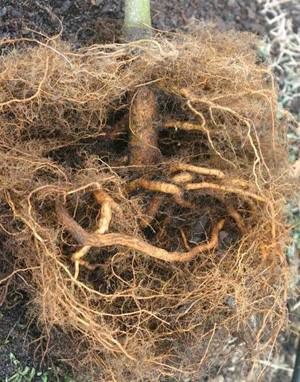
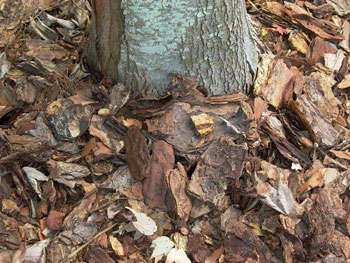
Root problems announce themselves in the non-specific way most other tree issues do. And buried roots tell no tales. But the mere fact that you can't see the root flare (a swelling where roots join the trunk that is visible at the soil surface) on a mature tree should tell you that something is amiss. See these links on how to correctly plant a tree and what can happen when you don't.
A Shave And a Haircut Are Not Pruning Techniques
The Spring Shearing:
It's a popular misconception that trees "like" to be "pruned," just like
grass "likes" to be cut. It "encourages" them to grow faster. Like a
gun would "encourage" us to work faster. We cut our grass when it's too
long; we shear our trees when they get too big. Planting a smaller
tree would be the better solution for the tree and give the owner more
time to enjoy the appropriate-sized tree. Southern Living magazine has
an annual contest in observance of the too-common practice of " crepe murder." The University of Florida has advice for pruning crepe myrtles appropriately and descriptions of what can go awry when pruning is too vigorous.
My neighbor is going into the annals of awful arboriculture for the
stealthy way she is amputating the live oak next to her house; maybe
some day it will repay her diligence.
pruning is "hurricanes." It's true that they happen, but it's false that the tree needs regular "hurricane cuts" to save it from
being injured by a hurricane. The rationale is, "the fewer the
branches, the less wind force against the tree." What is forgotten, is
the "weaker the tree structure, the weaker the tree." For most trees,
the crown (the branching areas) should comprise 2/3 of the tree. But "overlifting" (removing too many lower branches) makes the tree top-heavy and
more prone to injury or uprooting. It may
be advisable to the best
thing to do is to trim the crown to reduce wind impact; this would consist of a light pruning that would shape the crown
more symmetrically but keep the tree canopy at 2/3 of the tree size.
If It Ain't Broke, Don't Fix It:
Doing nothing until something bad happens is not always the best decision. Some trees naturally form structurally strong branches;
others don't. Some trees form "co-dominant leaders" - that is the trunk seems to branch off. Trees with one central leader trunk are more stable structurally. This tree on the left would have benefitted from
timely pruning to remove one of the co-dominant leaders early in its life to become a single-leader tree. In nature weak-limbed trees may have loss of limbs or
shortened life spans. Trees whose limbs branch more horizonally from the trunk form stronger attachments than limbs that grow more vertical to the trunk. We don't want limb damage or breakage in the trees we plant, so if
we are willing to proactively prune the tree to a more structurally sound shape, we can enjoy such trees as redbuds or willows through their expected lifetimes.Many trees benefit from good pruning. Some don't need it for structural integrity. Know what you are getting, and if pruning is advisable, find out how and when to prune.
Although Mr. Lippi did not address the issues of fertilizer, fungicide, or insect control, he did indicate that one particular chemical, Metsulfuron methyl, present in herbicides used in the maintenance of St. Augustine grass has been implicated as a possible cause of serious live oak dieback.
Keeping your tree healthy and structurally sound helps ensure it will provide you pleasure during its normal life expectancy.
Subscribe to:
Posts (Atom)